01
Attorney-directed factual analysis
The documents are there. The record is not yet ready.
Amicus Data Partners helps counsel turn fragmented matter records into decision-ready internal work product before strategy hardens.
Attorney-directed, pre-expert factual analysis for high-stakes matters involving complex timelines, disputed knowledge, contradictory records, incomplete files, regulatory warnings, financial events, internal communications, or production-integrity questions.
Not legal advice. Not expert testimony. Not document hosting. Factual clarity for counsel's internal use.
The problem
High-stakes matters rarely arrive as a usable record.
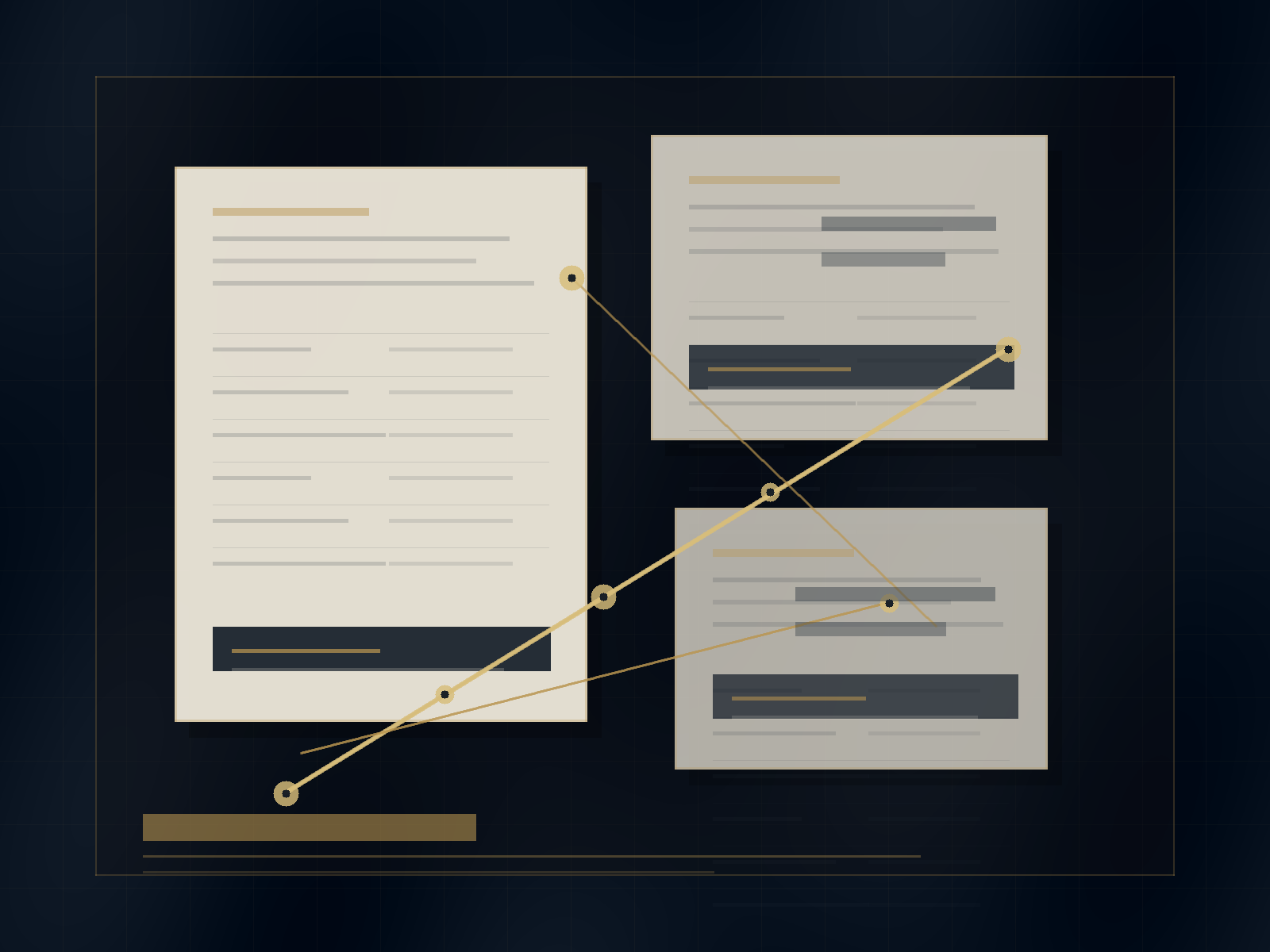
They arrive as fragments: productions, exports, board packets, messages, regulatory letters, trading records, missing files, and contested recollections. Amicus helps counsel move from document mass to factual posture.
The record is fragmented.
Matter teams inherit productions, board materials, emails, chats, regulatory correspondence, financial records, interview notes, and missing-file questions that do not naturally tell one story.
Strategy can harden too early.
Before dispositive themes, expert work, settlement posture, or regulator-facing narratives take shape, counsel needs to know which facts are supported, contradicted, or still untested.
Document volume is not record clarity.
Hosting and searching documents is useful, but it does not answer whether the record can sustain the factual posture counsel is considering.
What Amicus does
We test what the record can actually support.
Amicus turns messy legal records into decision-ready internal work product for counsel. The output is not a litigation narrative, a legal opinion, or a software dashboard. It is structured factual analysis: what is supported, what is contradicted, what is missing, and what deserves attention before the next strategic commitment.
Attorney-directed
Counsel defines the factual questions, scope, sensitivities, and intended use. Amicus works inside that direction.
Pre-expert
We help counsel understand the record before experts, consultants, witnesses, or public-facing positions are locked in.
Non-testifying
Our role is internal factual analysis, posture readiness, and counsel readout, not advocacy testimony or expert opinion.
Service-first
No platform onboarding. No software sale. Focused senior attention on the matter record and the questions counsel needs answered.
Where we fit
Between document collection and hardened strategy.
Amicus sits before expert work, testimony preparation, settlement posture, regulator-facing narratives, and dispositive themes. Counsel remains in control of judgment; Amicus clarifies the factual terrain.
Input
Fragmented records, counsel questions, date ranges, issue lists, production concerns, and matter sensitivities.
Amicus analysis
Chronology building, issue mapping, contradiction logging, unknowns tracking, support-gap review, and integrity analysis.
Counsel use
Internal decision support before themes, experts, interviews, negotiations, or regulator communications are locked.
Record Readiness Pilot
A bounded way to see whether the record is ready.
The pilot is designed for partners, in-house leaders, and matter teams who need a fast, sober read on a high-consequence factual issue without committing to a broad engagement.
Discuss a PilotA bounded record sample
Counsel selects a targeted set of materials, custodians, dates, issues, or production-integrity questions.
A short factual-readiness sprint
Amicus maps what the sample supports, where it conflicts, and what must be resolved before broader strategy hardens.
A counsel readout
The pilot ends with a concise posture-readiness summary and a practical recommendation on whether deeper analysis is warranted.
What we deliver
Structured internal work product counsel can actually use.
Each engagement is scoped to the matter. The work can be narrow and urgent, or broader where the record demands a deeper factual map.
When to use us
When factual ambiguity is expensive.
Amicus is most useful when the record is large enough to obscure posture, important enough to merit senior attention, and unsettled enough that premature certainty would be dangerous.
Before pleadings, motions, or settlement posture settle
Use us when a proposed factual theory needs record testing before it becomes difficult to revise.
Before expert work begins
Use us to clarify timelines, knowledge points, missing support, and factual tensions before expert scope is defined.
When internal and public records diverge
Use us to map what was known, when it was known, who saw it, and which documents cut in different directions.
When production integrity is contested
Use us to organize deletion, hold, missing-record, Signal, chat, and completeness questions into a decision-ready factual ledger.
Matter patterns
Built for records where timing, knowledge, and contradiction matter.
02
Fraud-by-hindsight defenses where plaintiffs use later deterioration to allege earlier falsity
03
Derivative/governance matters involving board demand, audit committee, or special committee records
04
FDA/SEC/regulatory-warning matters where timing and internal knowledge matter
05
Discovery/spoliation fights involving deleted messages, Signal, litigation holds, missing records, or production completeness
06
ERISA fiduciary-process cases involving committee minutes, benchmark reviews, investment-monitoring records
07
Complex financial-product disputes involving hedges, margin calls, valuations, trading instructions, collateral liquidation, or FX assumptions
How it works
A disciplined engagement model for sensitive matters.
The process is intentionally direct. No platform migration, no broad discovery project, no sprawling memo architecture unless the matter requires it.
1. Matter-fit call
We pressure-test whether the matter is a fit, identify the factual questions, and define the materials Amicus should review.
2. Counsel-defined scope
The engagement is framed around counsel's internal needs, sensitivity level, timeline, and intended decision points.
3. Factual analysis sprint
We build chronologies, matrices, tension logs, unknowns ledgers, and support-gap reviews from the provided record.
4. Readout and next-step map
Counsel receives concise internal work product that clarifies what the record supports and what remains unresolved.
What we are not
Clear boundaries are part of the value.
Amicus is intentionally narrow. The service is factual analysis for counsel's internal use, not legal advice, expert testimony, document hosting, generic staffing, or software.
Not a law firm
Amicus does not provide legal advice, appear in matters, sign pleadings, or replace counsel's judgment.
Not expert witnesses
We do not offer expert opinions, testify, or serve as a substitute for specialized expert analysis.
Not e-discovery software
We do not host document databases or sell search tools. We analyze the factual record counsel provides.
Not generic litigation support
The work is focused on high-stakes record posture, factual tensions, support gaps, and decision readiness.
Not a SaaS platform
Technology may assist the work, but the service is directed analysis, not software adoption.
Trust, confidentiality, attorney direction
Designed for sensitive records and careful internal use.
The service is structured around counsel direction, narrow scope, limited written output, and sober handling of confidential matter materials.
Counsel-directed work
Questions, scope, materials, and readouts are controlled by counsel for internal legal-team use.
Confidential matter handling
Amicus is built for sensitive records, disciplined access, tight engagement scope, and careful written output.
Privilege-aware, not privilege-promising
We follow counsel's confidentiality protocols and do not make privilege determinations or overstate protection.
Non-testifying posture
The work is designed for factual clarity and internal decision support, not public advocacy or witness presentation.
Founder / credibility
A founder-led practice for matters where factual posture matters early.
Amicus Data Partners was formed for legal teams facing the same problem again and again: the materials are voluminous, the stakes are high, and the decisive factual questions are not yet organized. The practice is built around attorney direction, careful record handling, and precise internal output that helps counsel see the factual terrain before strategy hardens.
The practice combines structured analytical execution with senior advisory experience across finance, markets, and doctoral-level research — including PhD-level academic training and more than two decades of trading-desk and financial-markets experience. Amicus does not provide legal opinions or testimony; it organizes the factual terrain so counsel can make better judgments from a clearer, source-linked record.
Careers
Build the factual infrastructure behind high-stakes legal decisions.
Amicus Data Partners is building a selective analyst bench for full-time and part-time roles across legal records, litigation data, public-record research, and business development intelligence.
Our work is built for matters where facts are fragmented, timelines are unclear, and legal teams need structured internal clarity before strategy hardens. We look for people who are careful with details, discreet with information, strong with written analysis, and comfortable turning messy records into organized, source-linked work product.
These roles are ideal for candidates with interests in law, finance, investigations, litigation, data analysis, research, or professional-services business development.
Every role supports attorney-directed, non-testifying internal work product. Precision, confidentiality, and judgment matter here.
Current Open Roles
01
Litigation Records Analyst — Full-Time
Role overview
Litigation Records Analysts support matter-level factual organization for record-heavy legal matters. This role focuses on reviewing documents, organizing timelines, tagging source materials, identifying factual gaps, and helping convert disorganized records into structured internal work product.
What you may work on
- Building master chronologies from emails, filings, transcripts, spreadsheets, and other matter records
- Tagging source documents to key facts, dates, people, and issues
- Identifying inconsistencies, missing support, and unresolved factual questions
- Supporting contradiction logs, unknowns ledgers, and issue-to-record matrices
- Preparing clean, organized work product for senior review
Strong fit for
Pre-law students, law students, paralegal-minded candidates, litigation support candidates, strong writers, and highly detail-oriented researchers.
Ideal traits
Careful, discreet, organized, skeptical, patient with messy documents, and comfortable working under structured direction.
02
Legal Data & Research Analyst — Full-Time / Project-Based
Role overview
Legal Data & Research Analysts support Amicus’s litigation-data and public-record research workflows. This role is for candidates who can work across PACER, SEC filings, court records, public company materials, legal news, and structured spreadsheets to extract useful matter intelligence.
What you may work on
- Reviewing dockets, complaints, motions, orders, and regulatory filings
- Extracting key parties, dates, firms, allegations, events, and procedural milestones
- Building structured datasets from public legal and financial records
- Supporting securities litigation, regulatory, and enforcement-related research
- Preparing clean Excel or database-ready outputs with source references
- Helping identify matter patterns where Amicus may provide useful support
Strong fit for
Candidates interested in litigation analytics, securities litigation, financial research, public company analysis, regulatory matters, or data-driven legal research.
Ideal traits
Analytical, source-disciplined, comfortable with spreadsheets, able to work carefully across legal and financial documents, and focused on traceability.
03
Business Development Research Associate — Full-Time
Role overview
Business Development Research Associates help identify high-fit attorneys, firms, active matters, and public legal triggers where Amicus may be relevant. This is not generic sales support. The role focuses on intelligent, matter-specific research for a high-trust professional-services business.
What you may work on
- Researching law firms, attorneys, practice groups, and active matters
- Identifying white-collar, investigations, securities, regulatory, and record-heavy litigation opportunities
- Reviewing PACER, SEC releases, law firm announcements, public complaints, and legal news
- Building targeted lead lists with clear fit rationales
- Drafting concise research notes explaining why a matter or attorney may be relevant
- Supporting tailored outreach with matter-specific context
Strong fit for
Candidates interested in legal business development, law-firm strategy, consulting, litigation intelligence, sales research, or professional-services growth.
Ideal traits
Commercially curious, precise, persistent, research-driven, strong at pattern recognition, and able to explain why a specific person or matter is relevant.
What We Look For
We value people who can think clearly, write precisely, handle confidential information carefully, and work with structure. You do not need to know everything on day one, but you must be willing to learn, verify your work, and treat details seriously.
Strong candidates often have experience or interest in:
- law, litigation, compliance, or investigations
- finance, securities, or public company research
- data analysis, spreadsheets, or structured research
- writing, editing, source review, or document-heavy work
- professional-services business development
How to Apply
Send a short note with your background, role of interest, and one example of work that shows careful research, structured thinking, or strong writing.
Contact: careers@amicusdatapartners.com
Confidential matter-fit call
Before strategy hardens, know what the record can actually support.
Share only enough to assess fit. A brief submission helps determine whether the matter record is appropriate for an initial confidential discussion.